
Chief Justice of India DY Chandrachud has set in motion the process of appointment of his successor by recommending to the Centre the name of senior-most Supreme Court judge Justice Sanjiv Khanna.

Justice Khanna, who will serve as CJI for a little over six months, will demit office on May 13, 2025.

He will take oath on November 11, a day after incumbent Justice DY Chandrachud demits office on attaining the age of 65.

After the conclusion of the ceremonial bench proceedings, the CJI met journalists in the apex court premises and said,
Some of his directives had the Supreme Court judges disclose their assets whereas the row over the discovery of cash from a sitting judge's official residence paved way for inquiry.
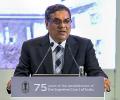
Justice Khanna was elevated as an additional judge of the Delhi high court in 2005 and was made a permanent judge in 2006. He was elevated as a judge of the Supreme Court on January 18, 2019.

The Centre is reportedly considering moving forward with the impeachment process against Justice Yashwant Varma in the upcoming Winter session of Parliament, despite his resignation. A Lok Sabha Speaker-constituted panel has found him guilty of possessing unaccounted cash and disturbing evidence.
Justice Sanjiv Khanna 'belongs to that school of legal luminaries who give the highest primacy to facts.'
An inquiry committee's report into allegations against Justice Yashwant Varma, who faced removal proceedings over unaccounted cash found at his residence, was tabled in Rajya Sabha. The report details the investigation into the alleged discovery of burnt currency following a fire at his official residence. Justice Varma has since resigned, rendering the removal proceedings infructuous, though his resignation is yet to be formally notified.

A panel set up by Lok Sabha Speaker to probe allegations of discovery of cash at the official premises of Justice Yashwant Varma has concluded that the charges of unexplained cash, disturbing evidence and evasive explanation against him "are proved".

Justice Sanjiv Khanna, who has been part of several landmark Supreme Court judgements such as scrapping the electoral bonds scheme and upholding abrogation of Article 370, will be sworn in as the 51st Chief Justice of India on Monday.

The report of a three-member committee investigating the grounds for the removal of High Court judge Yashwant Varma, following the discovery of burnt currency notes at his residence, will be tabled in the Lok Sabha during the upcoming Monsoon session.
The Judges Inquiry Committee, formed to investigate allegations against Justice Yashwant Varma, has submitted its report to the Lok Sabha Speaker. The report, concerning allegations that led to impeachment proceedings, will be presented before both Houses of Parliament.
An inquiry committee investigating allegations against Justice Yashwant Varma, concerning unaccounted cash found at his residence, has submitted its report to the Lok Sabha Speaker. The report will be presented to both Houses of Parliament during the Monsoon Session.
Justice Yashwant Varma of the Allahabad High Court has resigned amid impeachment proceedings sparked by the discovery of burnt currency at his residence, raising questions about judicial conduct and accountability.
The Supreme Court has appointed former Chief Justice of India Sanjiv Khanna as the sole mediator to resolve a dispute involving businessman Ashokbhai Haribhai Gajera and others in a case linked to textile market projects in Surat. The case involves allegations of siphoning off Rs 1,900 crore and forging documents.
The remarks were made by the bench which refused to agree with the submission made on behalf of Justice Varma that the deputy chairman of Rajya Sabha had no power to reject a motion and, under the Judges (Inquiry) Act of 1968, only the Speaker and the chairman have the power to accept or reject a motion against a judge.
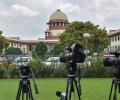
Chief Justice of India Ranjan Gogoi will administer the oath of office to the two judges on Friday, an official circular said.

The Supreme Court expressed its disapproval of an analogy used by the Centre in support of the inclusion of non-Muslims in Waqf boards, stating that such logic would disqualify a bench of Hindu judges from hearing matters related to Waqf. The CJI questioned the Centre's stance on the provisions of the Waqf (Amendment) Act, 2025, which allows non-Muslim members in the Central Waqf Council and state waqf boards. The Solicitor General defended the provisions, emphasizing that the non-Muslim inclusion is limited and does not impact the Muslim composition of these bodies. However, the CJI asserted that judges shed their religious affiliations while serving on the bench and maintained their secularity in their judicial capacity.

The Supreme Court on Wednesday ordered the deletion of advocate Bansuri Swaraj's name from its order of granting bail to AAP leader Sanjay Singh after the Enforcement Directorate said her name got added to the list due to an "inadvertent error".

The CJI called Justice Gavai his "biggest support" while expressing confidence in the latter's leadership and commitment to constitutional values.
A three-judge panel appointed by the Supreme Court of India has submitted its inquiry report to the Chief Justice of India on the cash discovery allegations against Allahabad High Court judge Justice Yashwant Varma. The panel, comprising Justice Sheel Nagu, Justice G S Sandhawalia, and Justice Anu Sivaraman, finalized its report on May 3. The report was submitted to the CJI on May 4 for further actions. The controversy was raised following a news report about the cash discovery row after a fire at Justice Varma's residence in Delhi on March 14. The report reportedly contains the findings of the panel into the alleged cash discovery row. Justice Varma has denounced any insinuation and said no cash was ever placed in the storeroom either by him or any of his family members.
The apex court had decided to hear the pleas related to the IOA and the AIFF together.

The Supreme Court is scheduled to hear on Monday Allahabad high court judge Yashwant Varma's plea seeking invalidation of a report by an in-house inquiry panel which found him guilty of misconduct in the cash discovery row.

Chief Justice of India Sanjiv Khanna has recused himself from hearing pleas related to the alleged illegal felling of hundreds of trees in the Delhi Ridge area. The decision comes after a previous bench, led by former CJI D Y Chandrachud, sought a personal affidavit from Delhi Lieutenant Governor V K Saxena in the case, which also sought contempt proceedings against certain DDA officials. CJI Khanna stated that his prior involvement with the Delhi LG while serving as the NALSA chairman would make it inappropriate for him to hear the plea. The bench has ordered the listing of the pleas before a different bench starting November 27.
High court judge Yashwant Varma has denied before the SC-appointed inquiry panel his involvement in the discovery of huge cache of burnt currency notes from a storeroom in his official residence. A fire broke out at the judge's official bungalow at 30 Tughlak Crescent on the night of March 14, leading the cash discovery.

The Supreme Court of India has agreed to examine whether Muslims can be governed by secular Indian succession law for ancestral properties instead of Shariat without renouncing their faith. The court will consider three petitions on the matter, including one filed by Naushad K K, a resident of Kerala, who wants to be governed by the succession law without leaving Islam. The court has issued notices to the Centre and the Kerala government to file their responses.
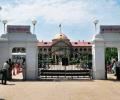
The Allahabad High Court Bar Association has opposed the transfer of Delhi High Court sitting judge Justice Yashwant Varma, from whose official home a huge stash of cash was reportedly discovered. The association said that the Supreme Court's decision to transfer Justice Varma back to the Allahabad High Court was "taken aback".
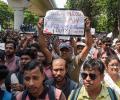
The Supreme Court has extended the services of terminated teachers in West Bengal who were found untainted by the CBI, providing relief to the state. The court did not, however, extend the services of grade 'C' and 'D' employees of state-run and aided schools. The court directed the state government to start the recruitment process by May 31 and conclude it by December 31.
The Union government is considering an impeachment motion against Allahabad High Court judge Yashwant Varma, who was indicted by a Supreme Court-appointed probe panel after burnt cash was found at his residence. The government is likely to consult with opposition parties before moving forward with the motion, which would require a two-thirds majority vote in Parliament.
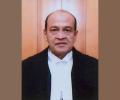
Officials aware of the procedure to appoint and remove Supreme Court and high court judges pointed out that while defending his case before lawmakers in any of the House, Justice Varma can announce that he is quitting and his verbal statement will be considered as his resignation.
Lok Sabha Speaker Om Birla admitted a notice for the removal of High Court judge Justice Yashwant Varma and constituted a three-member committee to probe charges against him.
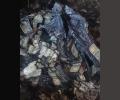
The judges were inside the official residence of Justice Varma for around 30-35 minutes and apparently inspected the site, sources said.
The Supreme Court dismissed Allahabad High Court judge Yashwant Varma's plea seeking invalidation of a report that found him guilty of misconduct in the cash discovery row.

The Supreme Court of India has made public the asset details of its judges, including Chief Justice Sanjiv Khanna who has Rs 55.75 lakh in a fixed deposit, a three-bedroom DDA flat in south Delhi, and a four-bedroom apartment measuring 2,446 square feet in the Commonwealth Games Village. The court has also uploaded the complete process of appointments to the high courts and the Supreme Court on its website for public awareness.
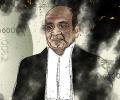
'If the parliamentary committee's report does not find substantiated charges, the process ends.'
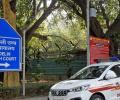
The Delhi High Court Chief Justice, D K Upadhyay, has submitted a report to the Chief Justice of India, Sanjiv Khanna, regarding the alleged discovery of cash at Justice Yashwant Varma's official residence. The report follows an in-house inquiry initiated by Justice Upadhyay after a fire at Justice Varma's residence on Holi night. The Supreme Court Collegium will now examine the report and may take further action. The Supreme Court has also stated that a proposal to transfer Justice Varma to the Allahabad High Court is separate from the in-house inquiry.

Justice Bhushan Ramkrishna Gavai was on Wednesday sworn in as the 52nd Chief Justice of India.
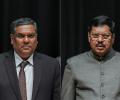
From demonetisation to sub-categorisation of Scheduled Castes to bulldozers, Justice Gavai has been part of several judgments.
The Supreme Court will hear a plea on Friday seeking a direction to Delhi Police to lodge an FIR over the alleged discovery of semi-burnt stash of cash from the official residence of High Court judge Yashwant Varma. The plea was filed by lawyer Mathews J Nedumpara and three others on Sunday. It challenges the 1991 judgement in the K Veeraswami case, in which the top court ruled that no criminal proceedings could be initiated against a judge of the high court or the top court without the prior nod of the Chief Justice of India. The alleged cash discovery happened following a fire at Varma's Lutyens Delhi residence on March 14, prompting the fire officers to rush to the spot. A Supreme Court-appointed in-house committee visited the residence of Justice Varma on Tuesday to commence its inquiry in the matter. Justice Varma denounced any insinuation and said no cash was ever placed in the storeroom either by him or any of his family members.
